Showing posts with label English. Show all posts

Tuesday, November 05, 2024

Book Reviews 2021 for Koorong

My Book Review Contributions on Koorong Books webpage continued...

#7.
The Christmas We Didn't Expect: Daily Devotions For Advent
Author: David Mathis


There are many unexpected things in this book from the unexpected conception, parents of lowly estate, undignified visitors all the way to unexpected joy and that Unexpected Day. Written as 24 daily devotions for Advent, Mathis provides fresh revelation out of deep contemplation from multiple facets of Christmas that most of us might not have focused on. The very fact that His journey of human life started like us: from ovum to zygote to embryo to fetus to newborn. The call to look beyond ourselves. How Christmas will change us if our hearts will be softer or more callous. I bought this book not long after its release as it's highly recommended by John Piper. I'd say that the message of these devotions is to exhort us that the sweetness and essence of Christmas must be drawn and lived daily all year through, not just in the 24 reflective days leading to the D-Day. Above all, Christmas is worth celebrating not just because God came down as human but also because He forever joined our humanity to His divinity. This is truly a book on Christmas I didn't expect.t-sized book which could serve like a sanctuary that keeps ourselves pure in a time of common infection.
---


#8.
How Should I Think about Money?
Author: RC Sproul
https://www.koorong.com/product/how-should-i-think-about-money-23-in_9781642890587#product-tabs

EJ Book Review

Review Title: Profitable must-read for everyone
Review Stars: 5
Book Review by Emil Jayaputra, 26 September 2021

It is interesting that Jesus actually teaches about money more often than other topics like faith, prayer, heaven, or hell. With a keen interest and background in accounting and economics myself, this book offers a fresh insight to how we should be wisely managing our resources especially our finances. What I like about this book is it's small enough so you can read it quickly but still covers a lot of relevant subjects. Poverty, wealth and investments, value, inflation, interest, and owning a business are seated on the Scripture perspective in a separate chapter. At the same time the author also provided stories and lessons from history which help explain the concepts better. Without a doubt, this book will be a useful and worthwhile guide to families, business owners, employees, investors, company management, and everyone because how you handle your own money and/or manage others' money matter to God. Here and eternally.
---


#9
Reformation Questions, Reformation Answers: 95 Key Facts
Author: Donald K. Mckim
https://www.koorong.com/product/reformation-questions-reformation-answers-95-key-facts-donald_9780664260606#product-tabs

EJ Book Review

Review Title: Bite-Size Emphasis on Back to Bible
Review Stars: 5
Book Review by Emil Jayaputra, 31 October 2021

The 95 theses posted on the Castle Church in Wittenberg by Martin Luther have undeniably triggered and transformed the Christian church in Europe and and Christianity the world over. Since then over 504 years have passed. Numerous books and resources have been written in various disciplines on this defining moment of the church history. One of them was this humble 'Reformation Q&A: 95 Key Events, People & Issues' by Donald K. McKim. Starting with questions on the backgrounds like What was the Reformation all about, how did it develop, the author moved on to name 17 people leading and playing meaningful roles in this movement. Various happenings and topics surrounding one of the most studied events of Western world like Diet of Worms, Indulgences, Geneva Bible, Free Will are covered about one-page long each. Finally the author dedicated nine bite-size Q&A on the Reformation contributions to social welfare, modern science, even capitalism, and what it means for us today. It's lamentable that some Christians are still unaware of the importance of this critical episode that actually helped bring back the focus on the Bible as the highest authority and only theological basis for the Church. In an informal, easy-to-read way, this book will reintroduce the cruciality of the great Reformation because these days we are living in come with "every wind of teaching and the cunning/craftiness of people in their deceitful scheming" (Ephesians 4:14). Happy Reformation Day 31 October 2021!
---

#10.
Love Came Down At Christmas: Daily Readings For Advent
Author: Sinclair B. Ferguson
https://www.koorong.com/product/love-came-down-at-christmas-daily-readings-for_9781784982898#product-tabs


Review Title: A Perfect Christmas Gift
Review Stars: 5
Book Review by Emil Jayaputra, 5 November 2021

It's not everyday that you would get to read and learn much about the most wonderful and comprehensive definition of love in 1 Corinthians 13 from the perspective of Christmas. Sinclair Ferguson linked these two because he said that that best-known chapter written by Paul is basically a description of Jesus Christ Whose birth we celebrate at Christmas. So Christmas is all about love. And what is love? "Love is simply being like Jesus". Naturally this book would be perfect for daily devotion use starting December 1 leading to Christmas Day as there are 25 chapters including Introduction. Each chapter is a comfortable reading that's about five-page long. The author finished every chapter with a brief contemplative reflection and poetic prayers composed by various famous theologians/authors like Augustine of Hippo or Charles Wesley. I can also recommend that you gift this book as a Christmas present for your family, friends or colleagues this Christmas because I know I will. May our God Who loves us so much with gifting His only Son to redeem us grant that we long and get to know more of Him, what Love looks like, and what Love actually means by musing on this truth that "real love always comes down" for Love came down at Christmas.
---

Book Reviews 2020 for Koorong

My Book Review Contributions on Koorong Books webpage continued...

#3.
Counterfeit Gods: When the Empty Promises of Love, Money, and Power Let You Down
Author:  Timothy Keller


Highly relevant and crucial reading
By Emil, 29 Feb 2020

What I love about this book is that it actually identifies and dismantles our inherently acute conditions. Generally speaking, more obvious idols are money, sex, and power. But Tim Keller fleshed the idea out from biblical perspective that the idolatry enslaves and distorts our lives like the culture of greed that eats away at our souls and brings down economic collapse. Idolatry is not just a failure to obey God but a setting of the whole heart to replace God with the idols even when it sounds positive like family, work, career. Tim also advised how to replace our counterfeit gods, i.e. that Jesus must become more beautiful to your imagination, more attractive to your heart than your idols. Rich of relevant quotations from Jesus Himself and influential thinkers like Martin Luther, C.S.Lewis, R.Niebuhr, he wraps all his messages around the real life stories from the Bible and modern times like WW II and the GFC 2008. For all intents and purposes, this book is highly readable and crucial to every serious Christian at each stage.
---


#4.
The Great Gain of Godliness
Author:  Thomas Watson


A must Puritan reading

 By Emil J., Mar 12 2020

In the midst of such degenerate era as this where being godly, pious, or even just the word religious could become a source of mockery, The Great Gain of Godliness advised Christians to be like a living fish swimming against the stream. Not a dead fish down the stream. Thomas Watson reminds us in this book: "The looser others are, the stricter we should be. The more outrageous others are in sin, the more courageous we should be for truth." For those longing to be an upright person who shines in the dark and holds fast his/her integrity (Psalm 37:37), I would highly recommend this compact-sized book which could serve like a sanctuary that keeps ourselves pure in a time of common infection.
---

#5. [unrecorded / deleted by Koorong]
Most likely one authored by Ravi Zacharias


#6.
ANGELS
Author: Billy Graham


Spiritually Comforting
By Emil Jayaputra, 25 Jun 2020

For some reason I have long been inquisitive to learn more about angels as this topic is not usually discussed in depth in sermons or daily talk. This book called "Angels (Ringing Assurance that We Are Not Alone)" is fit for its purpose as it quenches my thirst for many aspects of these ministering spirits. Plus it was written by Billy Graham, possibly the most prominent and influential Christian preachers in 20th century. The book assures me of angelic protection over God's children in times of hardship and danger. (Read the strange Christian bookroom incident as told by Dr. Nelson Bell, Dr. Graham's father-in-law, in 1942 in Shanghai China in one morning that lasted for two hours to be "enchanted".) Dr. Graham wrote some people strongly believe that each Christian may have their own guardian angel which possibly begins in infancy according to Jesus in Matthew 18:10. It also offers great comfort reading numerous accounts of heavenly escort of angels when believers cross that thin veil (death) from natural world to spiritual world... into the presence of the Lord. Needless to say, I highly recommend this book to my fellow believers especially those who, due to this ongoing pandemic COVID-19, are sick or dying, under economic/mental pressure of everyday living, or frustrated by events of present challenges. Thank God for the ministry of His blessed angels.
---

Book Reviews 2019 for Koorong

My Book Review Contributions on Koorong Books webpage

#1.
CEV the Big Rescue Bible (Cover & Illustrations 2014)
Publisher: Bible Society Australia


A Great Starter Bible for an Early Reader
 By Emil, 05 Nov 2019
https://www.koorong.com/product/cev-the-big-rescue-bible-cover-illustrations-2014_9780647519103

I bought this Big Rescue Bible for my son in Year 1 because I think it fits someone who just starts learning how to read: Font size not too small, not too heavy (hence avoided hardcover version), got introduction of each book, footnotes, side space for note taking, mini-dictionary, 20 pages of full color pictures, CEV text (which retains the form of and captures the spirit of King James version). And guess what, my little boy loves it so much that he reads it fervently (like unseen before) whatever the reason might be. We can only thank God, hope and pray that his early enthusiasm would be rolling like a snowball into the future.
----


#2.
A Praying Life: Connecting With God in a Distracting World
Author: Paul Miller


Fresh, Balanced View on Prayer and the Pray-er

 By Emil, 26 Nov 2019

If you are bored with how any typical book on prayer shells out practical tips on how to pray, you've come to the right place. Like its title, it does talk a lot about prayers which shape our Christian life, hence the title "A Praying Life". Aspects of our spirituality that hinder our praying life, and how the state of our relationship with our Lord Jesus Christ are actually determined by our prayerfulness. The author also cites many real life stories in his own family which put the readers in perspective. In one story, for example, Paul tells of how prayer influenced what car they purchased. If you are struggling in many a life decision, you will certainly learn much from this book while at the same time being strengthened by its solid biblical theology which helps form your knowledge and understanding of God, self, and prayers in between.
---


Tuesday, March 16, 2021

Agoraphobia (English version)

Streetview Portraits of the Traveller 

A single sunbeam is enough to drive away many shadows. —Francis of Assisi

Image: instagram.com/streetview.portraits/

TODAY I encountered and learnt a new word. Agoraphobia. It's a feeling of anxiety leading to panic when leaving a comfortable environment. Usually one's own home. An agoraphobic person perceives outside places to be unsafe whether at the mall, the school, or simply being in front of their house.

On this 2021 International Women's Day, Google featured a woman with this condition. "Meet the artist who photographed the world without leaving home," goes the tagline of the 4-min video.

I turned curious. How did one get to be a world photographer if she never went outside her house? Even acknowledged for her work as an artist on this important global event!

Jacqui Kenny used Google Street View to snap numerous weird yet wonderful streetview portraits shot by Google car camera in various countries. She'd upload and display them in her Instagram account. Two horses kissing in a Mongolian savanna. A man in red walking while leading a cow by the roadside in Kyrgyzstan with towering green and reddish plants in the background. It's like a painting. In Veracruz, Mexico a man was seen wearing blue shirt and red pants with a pail of paint in his right hand standing atop a ladder leaning against a totally white wall clouded with blue sky above. Resembles a maestro painting.

Then I came across another piece which I found adorable. Jacqui named it The Irrelevant Gate. Located in Arizona, USA the small gate is only as wide as a one-person footpath. Standing at a distance from an elongated house. Surrounding it is free unhindered by neighbor, fence or any other barrier. (See the picture above.) Last but not least, there's also a series of snapshots of a dog chasing the Google camera car in Tacna, Peru running for a mile even whilst scuffling with another dog.

Suddenly this massive planet earth that we're living in turns into such a small world. The scenes of which are explorable and enjoyable from behind a computer desk. Admirable too when someone diligently gathered all the pictures from unique and interesting perspectives. This observation is actually redolent of life being laden with paradox. Massive yet small. Wonderful and refreshing. Yet we realise how ugly and depraved it is (or could be).

But perhaps that is the 'art'. How we should occasionally take a step back to try to obtain an unusual point of view in the midst of chaos frequently worse than what meets the eyes. All the while us hanging on and choosing to move on this short journey called life. Traveling here and there carving out some achievements. Despite only from sitting on a chair. Like the agoraphobic traveller. Happy International Women's Day!  (EJ - 16/03/21) Baca dalam Bahasa Indonesia

References:


Sunday, August 12, 2012

The problem with comfort and success


Eyes To See

My first glimpse of the Promised Land from the hills of Moab was disappointing. "Did this look a lot different when the Israelites got here?" I asked our guide as we looked toward Jericho. I was expecting a dramatic contrast from the east side of the Jordan. "No," she answered. "It has looked the same for thousands of years."

I rephrased the question. "What did the Israelites see when they got here?" "The biggest oasis on the face of the whole earth," she replied.

Then I understood. I had ridden across the barren desert in the luxury of an air-conditioned bus stocked with cold bottled water. To me, an oasis was nothing spectacular. The Israelites had spent years wandering in a hot, dry desert. To them, the sprawling patch of pale green in the hazy distance meant refreshing, life-sustaining water. They were parched; I was refreshed. They were exhausted; I was rested. They had spent 40 years getting there; I had spent 4 hours.

Like an oasis, God's goodness is found in dry and difficult places. How often, I wonder, do we fail to see His goodness because our spiritual senses have been dulled by comfort. Sometimes God's gifts are seen more clearly when we are tired and thirsty. May we always thirst for Him (Psalm 143:6).

Dear Lord, may our desire for You be like that of
a deer panting for cold, refreshing water. Please
don't allow comfort or worldly success to keep us
from seeing You in every detail of our lives.
Jesus is the only fountain who can satisfy the thirsty soul.

Wednesday, January 20, 2010

Angels and friends

LEARNING OF THE DAY

"Friends are angels who lift us to our feet when our wings have trouble remembering how to fly." - Anonymous

I STILL can't figure it out as to why Abraham would without any doubt welcome and serve the three complete strangers standing in front of his tent one sweltering day (Genesis 18). It is said that weary travellers in that time were not as fortunate to find an inn as we would be these days. Hence what Abraham did, out of his lovingkindness, was simply entertain these men in the heat of the day. 

If this is resolved, there is still one thing unaccounted for when he also acts condescendingly by bowing low to the ground when meeting them and greets them "my lord". Biblical records quickly clarify that one of them is actually the LORD Himself (v.13).

Much further down the centuries following this piece of scene, we know that the writer of Hebrews advised us: "Do not neglect to show hospitality to strangers, for by this some have entertained angels without knowing it." (13:2)

Upon learning that these two parts of the Bible make reference to one another, it was like a clanging bell going off very loudly in my ear. I was astonished. This is just breathtaking that a verse talking about angels is not just talking but showing us the real example when it actually happened and how the situation might look like when it happened!

Then I paused to keep my head down in reflection on how far I have remembered to extend hospitality to strangers and friends in need. I was thinking through this new find that ought to be the base of my doing so in the past yet more importantly the days to come.

Automatically my mind wandered to the often-quoted sayings that angels are said to be those good friends or perhaps anyone around us who come our way... supporting us, protecting us, and caring for us. (EJ)

The angel of the Lord encamps around those who fear Him. And rescues them. -David in Psalm 34:8


Saturday, September 12, 2009

Superbia

When man at the peak of his life, intelligence and eloquence, insists he is "god" for himself, be subject to none other than himself and blatantly rejects his Creator and Redeemer, what can we say other than he is necessarily doomed at the lowest point of life for he's fallen prey to one of the seven deadly sins. Of which is in fact the most deadly one, namely superbia or pride.

As a learner, one can really learn from anyone or anything even including from the notorious history of Lucifer. It was indeed pride, excessive love of self, desire to compete with God, that resulted in his fall from heaven and transformation into Satan. Perhaps this is why pride then becomes acknowledged as the most serious of all the seven deadly sins originating from the father of lie himself. Which unsurprisingly turned out later to be the same sin that caused the first stain to contaminate the whole mankind through Eve and Adam.

The question now is: Shall we want to learn from history? Or we would rather be running around aimlessly in circles down the thousands of years of civilisation in full, active increasing openmindedness yet obliviously succumbed to a lethal consequence that we should have otherwise been able to avoid? Well, whatever happened to man saying he is the most rational creature? (EJ)

Friday, May 08, 2009

The 'ugly' flying blacks

RIVER BLINDNESS

I have most recently been struck by another grim reality where you can be made permanently blind, yes, physically I mean, by a particular insect called river black flies.

Strangely, though, these black flies do not live among us or the society with decent standard of life. Instead, these Onchocerciacis parasites appear along the levee of swiftly flowing rivers inflicting their horrific infection to the detriment of the already poor and underdeveloped peoples in Central and West Africa. It is thus named 'river blindness'.

As with other mosquitos, these swarms of flies do bite human. The difference is they aren't exactly after your blood. If you get bitten, they form colonies and live under your skins throughout your body for up to 18 years. They would then grow into worms and when they die cause grotesque inflammation, intense itching (to the point of 'unbearable'), agonising pain, and finally lost of sight since the worms' attack lead to a strong immune system that can destroy nearby tissue such as your eyes.

It was reported that about 18 million people are currently infected with this parasite and approximately 300,000 have been permanently blinded. To make matters worse this blindness cannot be reversed.

One good thing amid all these bad things is that such needless suffering is easily avoidable with an effective defence in the form of Mectizan tablets. When taken by adult or children, it can provide complete protection from this deadly infection for a whole year.

The thing is that there needs to be constant huge operations covering health workers reaching the affected areas hashing out the details of this medication, wide distribution of Mectizan to the remote communities as well as educating and training of the farmers and villagers in this unfortunate continent.

One second good thing these days is that for every single gold coin we share with these vulnerable people, the Australian government will match it by THREE dollars (making your $1 to be $4) towards this approved project through the Matching Grant Fund. A recommended AUD38 on our part (to be turned fourfold into $152) by CBM (Christian Blind Mission) Australia will go quite as far as ensuring 461 villagers receive enough tablets for bulwark against fatality right under their nose on a day-to-day basis. (Emil Jayaputra - 07 May 09)

Thursday, April 30, 2009

Struggle & hardship make strength: Edward Kennedy

From struggle & hardship, we learn to gain strength. Strength that wheezes out from a pressurised cooker pot with hissing sound being at the edge of overflowing - much to the fortification of the herbs inside for this wavering flesh of ours. / EJ

The 2009 No.1 TIME 100 

Edward Kennedy

His personal story demonstrates that strength is built through struggle and hardship, and he shares that strength with tremendous compassion and empathy. Channeling his own experiences with tragedy and loss, he has personally touched the lives of countless others who have had to confront their own challenges.

Teddy, 77, is a heroic figure not just in the Democratic Party but in American politics in general. That's because he overflows with energy and passion, and he devotes that intense caring to serving people in need and fighting on behalf of their causes. While he and I do not agree on every political issue, I have always admired his ability to work across the political aisle on matters such as immigration, health care, civil rights, education and the environment.

His expertise in politics is extraordinary. I have personally benefited from his experience and advice, as I know countless others have. As a Senator, Teddy has a clear gift for communicating with people and showing true leadership. Through his actions, he proves that public service isn't a hobby or even an occupation, but a way of life.

The new Administration is bringing health care back to the forefront of the domestic agenda, and there is one man I know who will push tirelessly to make quality health care accessible and affordable for all Americans. With Senator Kennedy leading the charge, nothing will stand in the way.

Schwarzenegger is the Republican governor of California and is married to Maria Shriver, the Senator's niece

Fast Fact: In a recent survey by the Hill newspaper, Kennedy's GOP colleagues ranked him No. 1 among Democrats for bipartisanship

Sunday, April 26, 2009

When you're up against the wall on ANZAC Day

Seraya 'memperingati' ANZAC Day 25 April kemarin, ada renungan yg juga relevan dengan pergumulan kita2 belakangan ini. /  EJ

Ketika Terpojok


Siapakah yang akan memisahkan kita dari kasih Kristus? —Roma 8:35


Pada tanggal 25 April 1915, pasukan sekutu Angkatan Darat Australia dan Selandia Baru (ANZAC) mendarat di semenanjung Gallipoli dengan harapan meraih kemenangan cepat. Akan tetapi, pertahanan gigih dari para pejuang Turki mengakibatkan terjadinya pertempuran berimbang selama 8 bulan yang menyebabkan ribuan orang dari kedua belah pihak terluka atau mati.

Banyak dari pasukan ANZAC yang dievakuasi ke Mesir mengunjungi perkemahan YMCA di luar Kairo tempat Oswald Chambers, seorang pendeta militer, memberikan pelayanan dan pengharapan bagi orang-orang yang mengalami kegetiran dan putus asa akibat perang. Dengan penuh pengertian dan kepedulian, Chambers mengatakan kepada mereka, "Tidak ada seorang pun yang tetap sama setelah mengalami suatu penderitaan; entah ia akan menjadi lebih baik atau lebih buruk, dan penderitaan dalam pengalaman seseorang hampir selalu menjadi hal awal yang membuka pikirannya untuk memahami kebutuhan akan penebusan yang dikerjakan oleh Yesus Kristus. Ketika orang itu merasa terpojok, berdirilah Allah di sana dengan tangan-Nya terentang, dan setiap orang yang terbawa ke dalam situasi tersebut sesungguhnya terbawa ke dalam tangan Allah. Salib Yesus adalah bukti paling utama dari kasih Allah."

Paulus bertanya: "Siapakah yang akan memisahkan kita dari kasih Kristus?" (Rm. 8:35). Jawaban yang datang darinya dengan sangat meyakinkan adalah bahwa tidak suatu hal pun akan dapat memisahkan kita dari kasih Allah, dalam Kristus (ay.38-39).

Ketika kita sudah terpojok, Allah ada di sana dan menyambut kita dengan tangan terbuka. —DCM

Allah mengetahui setiap jalan berkelok yang kulalui
Dan setiap kesedihan, rasa sakit, dan kepedihan;
Dia takkan mengabaikan anak-anak-Nya—
Dia mengenal dan mengasihi milik-Nya. —Bosch

Kasih Allah tetap teguh berdiri di saat semua bentuk kasih lainnya telah memudar. 

Source: English version "Against the Wall" is here .

Tuesday, July 17, 2007

Power and Leadership

POWERFUL is a good adjective. Leaders who are powerful are more likely than not to be effective. Leaders with too much power, unfortunately, are more often than not absolute in their actions with little concern of his advisers even his own true friends. They tend to turn agreed decisions on its ear, thus perceived to be abusive, self-centered, and high alone in the air. These leaders are only bound to plant seeds of hatred in the hearts of his own people who will eventually rid him of his self-accumulating excessive power.

Interestingly, the opposite situation could result in similar horrible outcome despite perhaps in a more subtle fashion. Given the same amount of power, a leader unwilling or unable to use his power is also doomed to be fruitless and engender unwanted split of power in pieces spread all over the place causing endless mayhem. These leaders are bound to plant seeds of distrust in the minds of his people. They are usually a convoluted type of person with reduced peace at sleep due to discreet conflicts of interest undisclosed to his people. Another "besotted" type is simply someone overly humble who tends to be submissive to the board in most areas of decision which would otherwise be just within the given circle of power that he unnecessarily, or worse, unconsciously gives up in the name of democracy or "votes in majority".

Power tends to corrupt and absolute power corrupts absolutely, shoots the pungent Lord Acton in his dictum to the Roman Catholic Bishop Mandell Creighton in 1887. But power that is unused and squandered tends to create a weak leader. And weak leadership is nearly equivalent to no leadership at all. And no leadership brings complete chaos in the society.

Your mission, Jim, should you decide to accept it, is to strike a reasonable balance between too much & too little in each role that you assume in your "society". Oh no, this is of course not the self-destroying recording machine that assigns our cherished Mission Impossible team their next mission. But the challenging mission remains ours. Yours and mine. (EJ)

Thursday, July 12, 2007

Dare to be different

Some people (particularly from Indo, I must regretfully admit) are just not used to being divergent in terms of opinion. It is normal for two persons in a physical meeting to be poles apart in an issue. This is fine because they can sort out the difference straight on the spot.

Alas, in a virtual meeting done via email trade, there's a good chance of A's question being not answered by B or anyone else and it is simply ignored like it was never asked at all. I can't understand the logic behind this. If silence is meant to be 'yes', it might still be acceptable. But when B is unresponsive to A's statement because B disagreed with it, why not voice it out? Why dare not be different? Is it, perhaps, due to sungkan? (sungkan = an Indonesian adjective --allegedly originating from Javanese culture-- where someone appears bashful to the extent of timorous in the face of words or action of someone else)

Regardless of the motive, not only is it unethical to pay no heed to someone's opinion, it does actually lead the whole team attending the meeting to an uncertain position as to what the final decision of the topic being discussed would be. As one put it very well, discussion without conclusion is confusion. I can't agree more with it. (EJ)

Tuesday, July 10, 2007

Truth & Relationship

Those who are courageous enough to confront should also be courageous enough to forgive and/or ask for forgiveness. What matters is that the truth has been said and set. Afterwards why not let life move on naturally like the water braves through the rocks and continues flowing on. Sadly, though, those with the courage to cope with confronting or being confronted are not generous or sincere enough with forgiveness, and some others are even worse being gutless to confront any way. And the corollary of that is they are not prepared to forgive or offer forgiveness. (EJ)

Daily Meditation (Henri Nouwen)

How Time Heals "Time heals," people often say. This is not true when it means that we will eventually forget the wounds inflicted on us and be able to live on as if nothing happened. That is not really healing; it is simply ignoring reality. But when the expression "time heals" means that faithfulness in a difficult relationship can lead us to a deeper understanding of the ways we have hurt each other, then there is much truth in it. "Time heals" implies not passively waiting but actively working with our pain and trusting in the possibility of forgiveness and reconciliation.

Saturday, July 08, 2006

Into PSALM 90

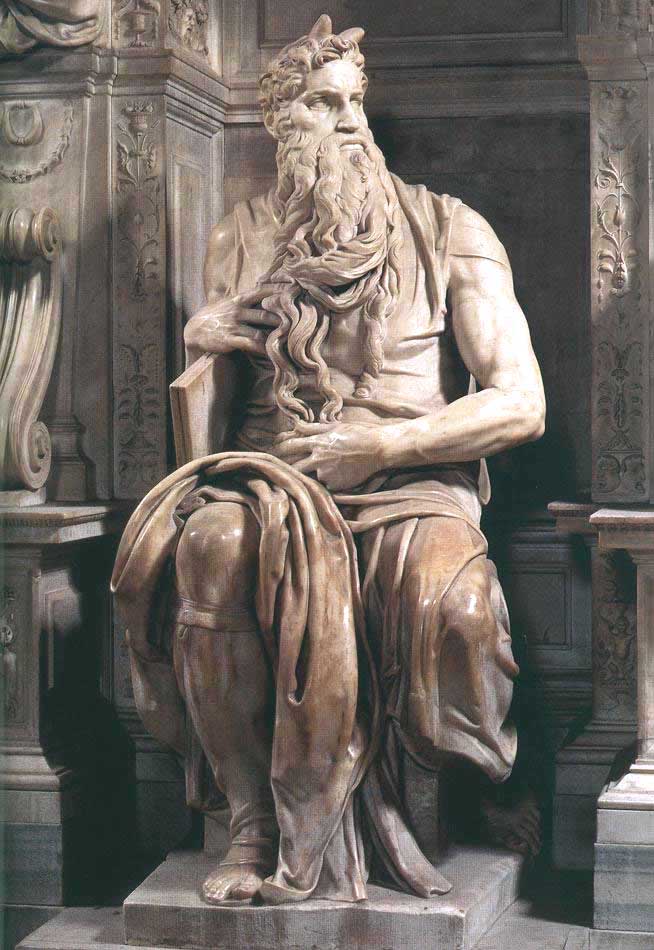
OF THE NUMEROUS parts and chapters in the book of Psalm which total 150, Psalm 90 is individually unique among the others. This is the only psalm written not by David nor Asaph, but by Moses. Unless thanks to this psalm, we would probably have been not sure if this great leader of Israel was also a writer of songs, poems, and prayers in the midst of his frustration and pressure heading those over two million stiff-necked people.

Psalm 90 conspicuously describes the sorrow and restlessness of a man before the Holy Lord. This Psalm contains prayers to the eternal God so that He shows His mercy upon His servants constantly living under God's rod of wrath and His deadly threats. In spite of this, the psalmist is indeed an honest person, confessing his sins & weaknesses to the Lord, and has faith that he may appeal to His God who is not only just but is Love Himself.

There are many striking points that have been my personal discovery within this chapter. As early as the first verse, Moses has acknowledged that it is the Lord who becomes his dwelling place throughout generations. In Bahasa Indonesia, the phrase “shady place” or “safe haven” is used. If you’re not indoors and it’s suddenly raining all over, you’ll be rushing off to any dry spot. Either a shady tree, covered bus stop, enclosed train station, or porch of people’s house or shop on the street. These are the sorts of places which personify our Lord in protecting us from the drenching showers of rain or battering wind. Throughout generations means genealogical from great-great- grandparents, great-grandparents, grandparents, parents, children, grandchildren, great-grandchildren, and so on endlessly. The Lord remains unchanged, never dying or finished like man, and consistently stays with us and our lengthy lineage since ages ago, now, and forever more.

From this point, Moses carries on to verse 2 where he declares the presence of pre-existing God prior to the universe, the earth and the mountains being born. The choice adverb of time to highlight the condition is ‘from everlasting to everlasting’. Man does have a beginning (when he/she comes out of their mother’s womb), but will not end (our soul won’t die). God is both beginningless and endless. He is there from everlasting to everlasting, so amazing. As for us, human of flesh and spirit, we’re really only trivial dust (v.3) easily gone at the blow of the wind.

Furthermore Moses’ contemplation brings us to a fact that the life of man spans like a dream just as the grass bud in the morning but wither soon in the afternoon on the same day. Time runs, even flies swiftly to our oblivion. Still fresh in my mind where I was about to enter the very first stage of my campus life with the compulsory Osmaba (new student orientation) program which was apparently a mere “formalised” occasion of the seniors bullying their juniors. But now, I would smile away at the reminiscence of those silly moments more than a decade ago. The human lifetime does travel forward (not in a circular way) so rapidly. Certainly there are lots of sins, old or new, that we have committed. Despite having been regenerated by the Holy Spirit, repented, and received Christ’s grace of forgiveness, we keep falling down the hedious traps of the devil. The prophet Moses openly admits this before God in verse 8. Moses is so fearful of God’s anger and wrath due to his transgressions. In verse 4, it dawns on him that 1000 years in the eyes of God is like a watch in the night. Then in verse 10, he contrasts it with the extent of human life reaching only for 70-80 years! At this point, can we possibly say that the days and years that we have walked past behind were full of significance and spiritual growth? Have we made any progress, in our roles, not merely as the recipient of God’s blessings, but more as the channel of His favors for other people?

Through a God-directed journey of life, Moses spent the entirety of his youth in the all-luxurious and sparkling palace of Pharaoh. During this time he made best use of studying the abundant repository of Egyptian knowledge and science of priceless value. At the second phase, Moses had had to live his life being guided by the Lord of shepherding sheep and goats in the barren desert. For this 40-year period, Moses suffered from loneliness and realised that he was nobody in the face of the mighty Lord (v.7). Which is probably the reason he got it off his chest in verse 9. Upon commencing his third 40-year when he was already 80, God commissioned him to lead the people of Israel out of the slavery in Egypt to go into the Promised Land. Physicallywise from human’s viewpoint, it was just impossible for someone in his eighties to be in charge of such a huge exodus. He was aware of this when he uttered verse 10. Nevertheless he did submit and comply under the authority of his God. In humbleness, he raised a prayer of request in v.12: “Teach us to number our days aright, that we may gain a heart of wisdom.”

This down-to-earth prayer is so beautiful and has such a deep level of reflections that it grows very famous and becomes a personal favorite of many Christians. Moses was thoughtful that his days would just be “gone with the wind” had he not walked it with the Lord all the way through. This verse implies a kind of time management concept where we should not make futile and underestimate the ‘grace of time’ that God has been giving day by day. Although a watch roster in the night is passing so briefly, perhaps at just the blink of an eye, it is still noteworthy. The various difficulties and miseries run into on the way were converted into learning occasions which dragged himself even closer to God and taught him to comprehend the meaning of life more broadly and wisely.

Moses also prayed: “Make us glad for as many days as you have afflicted us, for as many years as we have seen trouble.”(v.15) Imagine such a fifty-fifty living! 50% is filled with laughter and sounds of joyfulness, the remaining 50% is clouded with grief and tears. Should we be honest, we would not say a prayer that we are granted unhappiness or suffering upon us. At best, we'd pray: “Lord, let your will be done! Give us the strength and comfort when we have to go through all these.” This is of course not an inappropriate prayer. But like Moses we can, in fact, learn to ask for a “balance” between joy and sorrow going through our days on this earth. Why did Moses have such a prayer? In the following verses (16-17), this faithful servant of God explained his reasons, i.e. that God’s children and His chosen people (including himself) could still witness the great acts and glory of God in whatever situation that befalls them. The splendor of God’s grandeur is only clearly demonstrated by those who have succeeded the exams of life in such forms as twists and turns, pressure, oxidation and reduction of this life and comes out as a renewed individual, more mature and sparkling. A Chinese proverb expresses it so nicely: Zhen jin bu pa huo, pa huo fei zhen jin (pure gold does not fear fire, the one which fears fire is not pure gold).

Having said all the above, Moses acknowledged the sovereignty of God who makes all things possible to happen and reinforce all the “mighty” works of human hands and brains, both of which are too given by God the Omnipotent Creator. In the serenity of night, shall we whisper this in prayer:

O God, our Lord in Christ

You are indeed the Creator of man and this universe

our stronghold and our safe haven

Pelt far away our sins hidden in the light of Your face

Let our feet trod on high places for the joy that flows from You

Through the years of our age in such a way

To present before You a heart of life springing. (EJ)

PS:
This piece is the updated and translated (from Bahasa Indonesia) devotional article appearing first time on Reformedia bulletin Vol.4 (Jun-Aug06). Please feel free to fill in the comment form if you would like a copy of the bulletin.

Wednesday, May 24, 2006

A Rhapsody on Chibi River


On and on the Great River rolls, racing east
Of proud and gallant heroes its white-tops leave no trace,
As right and wrong, pride and fall turn all at once unreal.

When all the dreams drain,
Same are loss and gain.
Yet under the pink sunsets
the green hills ever stay
to blaze in the west-waving day

White haired fishermen comb the river isles
having seen enough of spring and autumn tides
Over a jar of wine they talk and laugh
Where many a famed event
Provides their merriment.

(from the epic story of Romance of the Three Kingdoms)


Friday, September 23, 2005

Education can break vicious poverty cycle

BEIJING, Xinhuanet -- Statistics, they say, conceal more than they reveal. Not always, though.

On September 8, the International Literacy Day, China announced it still has 85 million illiterate people. Most of them are clustered in the country's less developed rural areas of the landlocked western regions.

Earlier, Liu Xiaoyun, a scholar with China Agricultural University, disclosed that there are the same number of people in China still in the grip of poverty. Again, they are rural residents or migrant "floating" groups from rural areas.

The announcements may have been mutually exclusive but the figure of 85 million is more than a coincidence.

Official explanations are difficult to find but it is common knowledge that the illiterate are more likely to remain poor, and the poor are more likely to be illiterate (or uneducated and unskilled). It is a vicious cycle. The poor cannot afford education, and the illiterate cannot hope to earn enough to overcome poverty.

Those caught in the cycle tend to remain poor throughout their life and, in many cases, down the generations. And almost always, the children are the worst sufferers in this transgenerational poverty.

So how does one get out of the rut?

China enforced a nine-year compulsory education system in 1986; and the Ministry of Education reported a 90-per-cent attendance rate for compulsory education last year.

It is a reasonable postulation that the 10 per cent who didn't attend schools were children of the disadvantaged groups.

For the poorest group of children, poverty is both a cause and a result of inaccessibility to education. Poor children are less likely to be enrolled in schools or to complete the basic level of education. For, even if schooling is free (a goal of the Chinese Government), uniforms, stationery and transport are not. And these may still be well beyond the means of a poor family.

So what does a family with more than one school-going kid do? It may decide to pull out one or more of its children from school. Unfortunately, in most of the cases it is the girl child that falls victim to the hand of fate.

Xiao Mei, a senior secondary school student, is the daughter of one such poor family in Yuzhong County of Gansu Province. Since the rural household depends on income from agriculture, her father said he could no longer afford education for both children, Xiao and her brother. But he did not want to be unfair to either of them. So on August 24, he decided to choose the "school-goer" by drawing lots. The boy won. Unable to bear the pain of having to stay away from school, Xiao Mei tried to commit suicide. Fortunately, she did not succeed. That is how difficult and painful education for a poor family can be.

There is another reason why poor parents are forced to keep their wards out of school: family income. If the child is old enough to work and drops out of school, he/she can contribute, however little, to the family instead of making it pay for his/her education.

In 2003, China spent 3.28 per cent of its gross domestic product (GDP) on education - well below the world's average of 4.1 per cent for developing countries and merely half that of the developed ones.

Governments at the lowest levels - in townships and counties - shouldered the bulk of the financial burden to provide education for children, most of them in the rural areas. Unlike central and provincial governments that have a diverse source of revenue, the grass-roots authorities' income is heavily reliant on agricultural taxes and fees, thus putting them in a real Catch-22 situation as far as rural education is concerned.

The rural poor have to pay more so that grass-roots authorities will be better off financially to provide for their children's education. But the more they pay, the more impoverished their condition becomes. And the less they pay, the more difficult it is for the authorities to raise education funds. But worse than that is the choice a poor family has to make: falling deeper into poverty to educate a child, or maintaining the status quo without any real future for the children.

We know the cycle of poverty can be broken through education. So let the central and provincial governments shoulder a bigger share of the financial burden needed to make education truly free, starting with the poorest 10 per cent of school-age kids.

Such a move will help bridge the "education gap," or inequities in education - giving equal access to all children and relieving the poor of the pinch of education cost. We all know that if our children's future remains unpromising, so would be that of the nation. (Source: China Daily)

Tuesday, April 05, 2005

On the Eve of Good Friday


"And according to the Law, one may almost say, all things are cleansed with blood, and without shedding of blood there is no forgiveness." (Hebrew 9:22)

HAVE you ever had a second thought on why Jesus needs to die on the Cross and shed His holy blood to wash away our sins?

The answer is found in the Bible. Please read the above verse.

Without shedding of blood, there is no forgiveness. So whose blood should be shed? Human blood? No, it can’t because it is impossible to redeem human's sins with blood of his own which is of equal value.

In the Old Testament times, people sacrifice animals for their sin redemption. Was it actually proper? Not either. They did realise that blood of animals they sacrificed was even of lower value than their own human blood but they had no other choice but did so since the Messiah (Savior) they were expecting had not come in their times.

Now that the true Messiah has come in the Person named Jesus Christ (because He is alone fully man and fully GOD) and has shed His invaluable blood on the Cross, we have the privilege to look at His glorious Cross, trust in His redeeming our indelible sins, and receive Him as our only Savior & living God.

Why should we also receive Him as God & Savior? Because after He died on the Cross due to the indescribable physical & mental sufferings being crucified in such a lowly manner, He did resurrect from death on the third day and rise to heaven 50 days after that, and lives until now. This fact, nobody can deny as this is inscribed in history.

Throughout the history, has there been any person other than Jesus risen again after death, I mean real death? Nobody else. Why? Because all other persons are just fully human, while Jesus is fully human and fully God. Is there anything impossible for God to do? That's why resurrection was possible and it did happen.

Sounds illogical? Perhaps, to those who may still hesitate His being God as well. How do we know that Jesus was God too? He never sinned in His life. If there were sin ever committed by Him, what? Nothing. Nobody as far as history is told can show His having ever sinned or done mistake in His 33-year life on this earth. There's nothing wrong with Him.

The wrong thing simply lies in our self, our thoughts, our deeds ... because all of us have sinned. Contrarily to the above challenge to showing what Jesus' sin/fault was, now who among us and every human being ever lived on this earth (including all other religion founders and great thinkers) has never sinned or done wrong during their lives?

To keep it simple, how many sorry's you would utter to a number of people in one day has plainly demonstrated that we humans are never detached from mistakes, faults, errors, wrongs, or any other synonyms you can mention which are all embodied in one evil word: sin – regardless of how tiny it may be.

The bottom line is: H-G-S.

H> Who has ever sinned?
All persons in past, present, & future times with only human nature.

G> Who has never sinned?
A Person with human nature and Godly nature, named Jesus, lived around 2BC - 29AD.

S> The solution to dealing with the forgiveness of sins?
H should meet G because G has firstly initiated and offered the forgiveness of H's sins through His most beloved Son, Jesus Christ's death and shedding His unlimited-value blood to H who believes.

And not only forgiveness, for those who believe and receive Him, for them is also granted an eternal life, together with God forever and ever.

Christianity is that simple. (EJ)